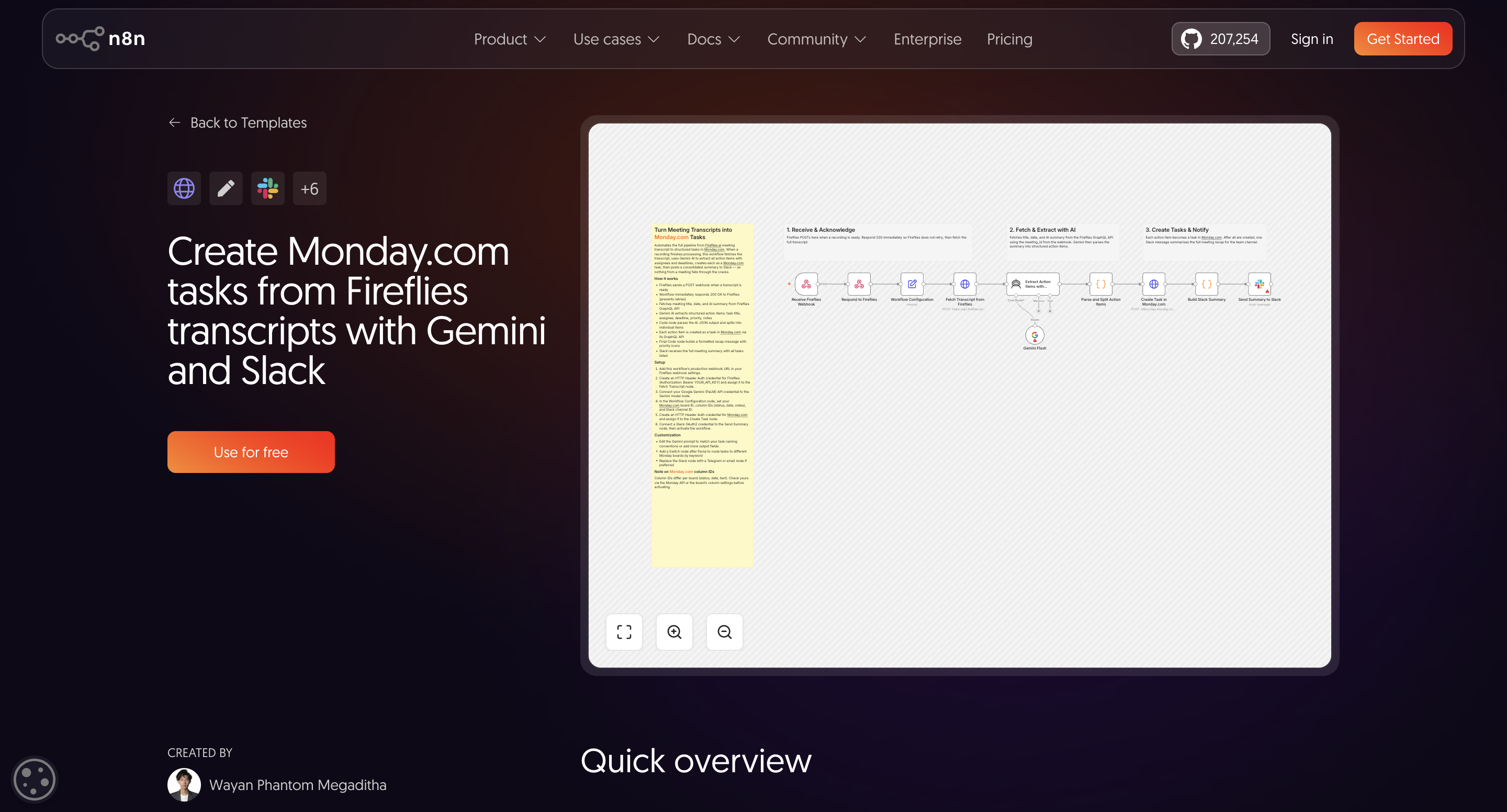
Meeting to Task Automation
The Problem
Most teams walk out of meetings with a good conversation and no structured record of who does what by when. Notes sit in someone's inbox. Tasks never make it into the project board. Follow-ups happen manually, or not at all. Fast-growing companies lose significant execution speed because meeting outcomes do not make it into the systems where work actually happens. This workflow was built in direct response to a real operational challenge described in the Bali Estate Group IT Automation Engineer job post: automating the gap between meeting and execution.
How It Works
- When a meeting ends, Fireflies.ai processes the transcript and fires a webhook to the n8n workflow URL. The workflow returns an immediate 200 OK response.
- The workflow queries the Fireflies GraphQL API to fetch the transcript title, date, summary, and detected action items.
- The full transcript content is sent to Gemini with a prompt that extracts a structured JSON array of action items. Each item includes task title, assignee, deadline, priority, and notes.
- The JSON output is parsed and split into individual task items. Each task is created in Monday.com via its GraphQL API with deadlines and notes mapped to board columns.
- A formatted recap message is built listing all created tasks with their assignees and deadlines. This is posted to the designated Slack channel so the whole team sees the output before they leave their desks.
Tech Stack
| n8n | Handles webhook ingestion, API calls, and branching logic without custom server code |
| Fireflies.ai GraphQL API | High-quality transcripts with webhook-triggered delivery |
| Gemini API | Reliable structured JSON output from transcript content with predictable parsing |
| Monday.com GraphQL API | Specified in the job post that inspired this build |
| Slack OAuth2 | Team recap delivery to the channel where work decisions happen |
What I Would Improve
The current workflow creates tasks from all detected action items without filtering by confidence level. Adding a Gemini scoring step that rates each action item by how clearly it was stated in the transcript would reduce noise in the Monday board. The workflow does not handle recurring meetings. A deduplication step that checks for existing tasks by meeting title and date before creating new ones would prevent duplicates when the same standing meeting runs weekly. The Slack recap is a flat list. Formatting it as a structured message with assignee grouping and priority indicators would make it more scannable for larger teams.